

Chaturanga has a reputation. It shows up in almost every vinyasa flow, usually right when the arms are already tired, and it gets rushed more than almost any other shape on the mat. This week it gets some proper attention.
What does Chaturanga Dandasana even mean?
Sanskrit breaks it down nicely:
Chatur = four
Aṅga = limbs or parts
Daṇḍa = staff or stick
Āsana = posture
Put together: Four-Limbed Staff Pose. Most people just call it Chaturanga, or use the cue “high plank to low plank.”
It’s a push-up, but not the way you think
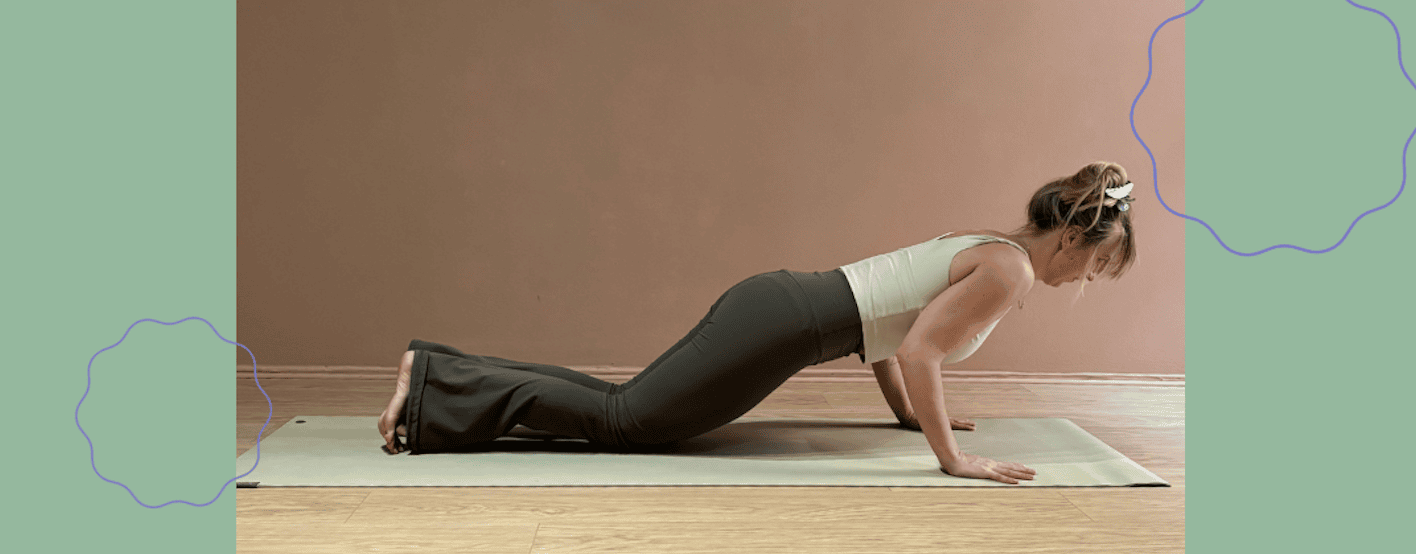
Chaturanga is basically yoga’s version of a very elegant push-up (but down?). Here’s the twist: the goal isn’t to get as low to the floor as humanly possible. It’s about organising the whole body as one integrated unit. That’s the actual work.
How to move through it:
Start in plank.
Press the floor away and keep the legs active as you shift slightly forward.
Bend the elbows, keeping them roughly alongside the ribs.
Lower with control. How far depends on the day. Think chest moving forward, not simply down.
Let the shoulders stay higher than the elbows, keeping space around the front of the shoulder.
The magic is in the balance: strong legs, a steady torso, a broad upper back, active hands. Instead of collapsing into a swan dive, imagine the whole body participating in the pose.
There is no prize for touching the floor
Chaturanga is not a compulsory depth test. If lowering all the way down makes the shoulders dump forward or the elbows splay out, stop higher, or take the knees down. A higher Chaturanga with beautiful organisation beats a dramatic face-plant every time.
The bigger lesson
Done well, Chaturanga teaches something about effort without unnecessary drama. It’s not a competition with gravity. It’s a chance to practice distributing effort, staying connected, and moving with intention, one small transition at a time.
Curious how it feels in the body? Find a class on the schedule and try it out.
